

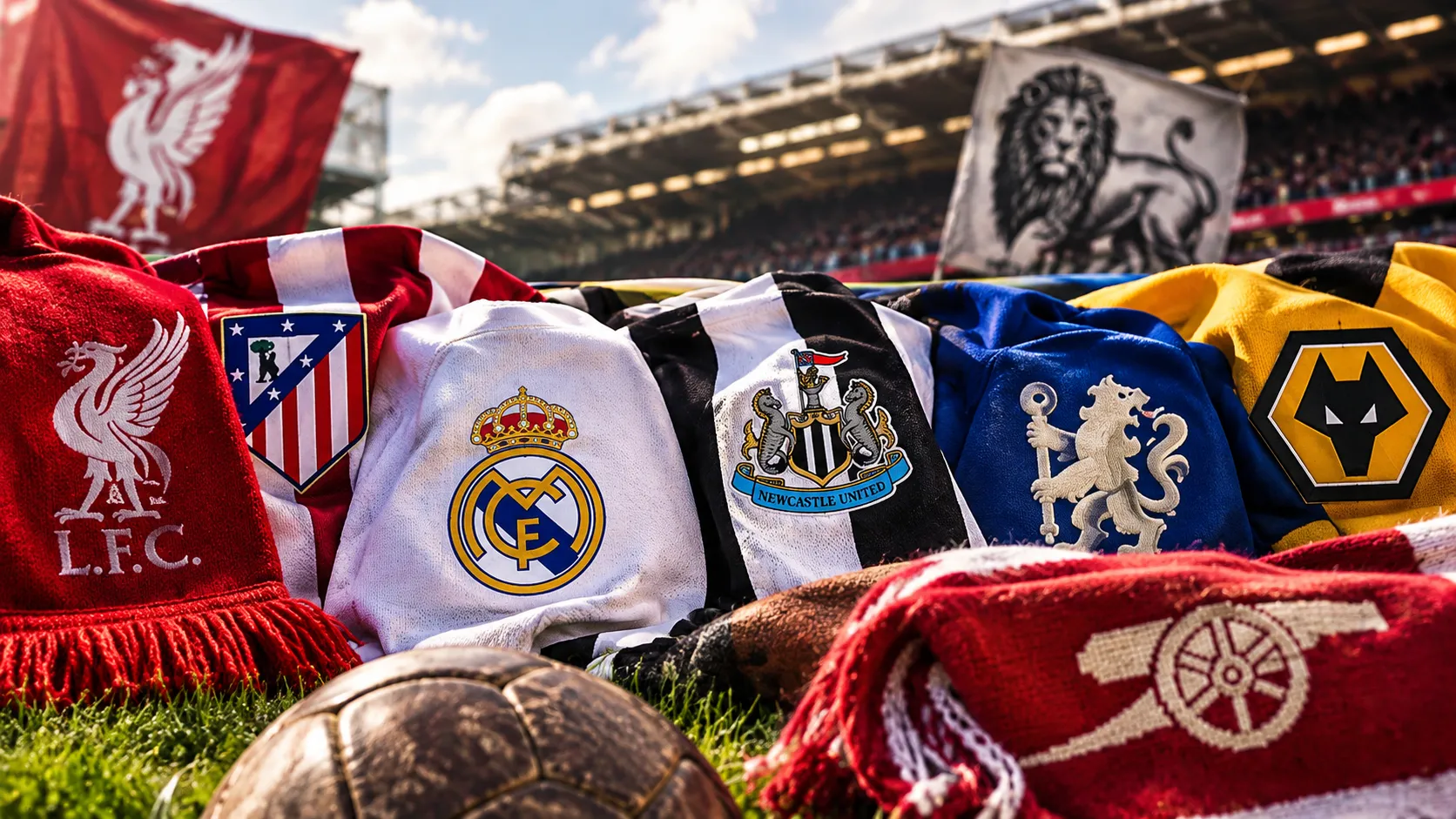
Ask why football clubs have nicknames and the answer is that almost nobody chose them. A club’s formal name was decided by its founders and registered; its nickname was given to it by supporters, opposing crowds or local journalists, and in a good number of cases the origin has been lost entirely.
That is what makes them interesting. A registered name records how a club was founded; a nickname records how it was seen, and the two tell quite different stories.
The industrial names
The largest and most revealing category. English football grew out of industrial towns, and a great many clubs were named for whatever the town made.
The Potters, from the pottery industry. The Blades, from Sheffield’s steel and cutlery trade. The Hatters, from hat-making. The Saddlers, from Walsall’s leather works. The Cobblers, from Northampton’s shoe industry. The Brewers, the Railwaymen, the Chairboys each one a record of what local people did for a living when the club was formed.
These are the nicknames most worth preserving, because in most cases the industry has gone and the nickname is the last thing in general circulation that remembers it. A town whose factories closed forty years ago still has eleven men running out as the Saddlers every other Saturday.
Animals, crests and the things on the badge
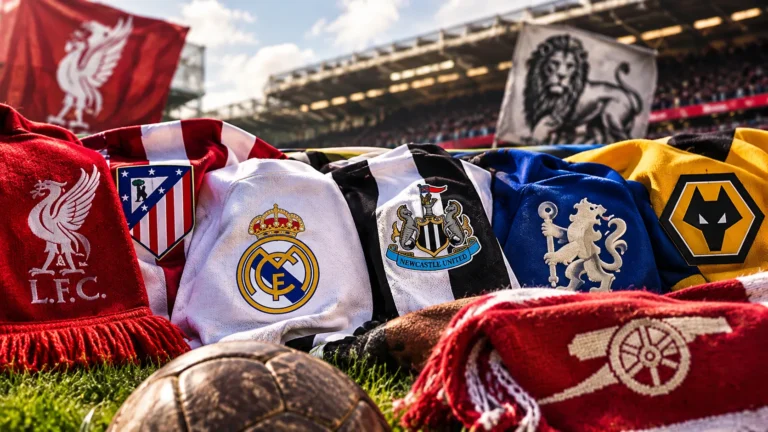
The second big group, and the one with the most circular history. Sometimes the animal came first and ended up on the crest; sometimes the crest came first and the nickname followed from it.
The Magpies, for black and white. The Owls, from the district of Owlerton where the club’s ground sits. The Canaries, from a local tradition of keeping and breeding the birds. The Eagles, the Foxes, the Robins, the Seagulls some descriptive of colours, some adopted from a badge, some chosen by supporters and later made official by a club that liked it.
The direction of travel matters for dating. A club whose crest features an animal it was already nicknamed after is showing you that the nickname predates the badge, which is frequently the case the crest arrived on shirts much later than people assume, as the story of the football club crest covers.
Colours, which are the simplest
The Reds, the Blues, the Clarets, the Whites, the Sky Blues. Unimaginative and entirely functional: a crowd needs something to shout, and the colour of the shirt is the most obvious thing available.
These are also the most shared. Several clubs are the Reds, which is why colour nicknames tend to work locally and fail nationally in one city it identifies a specific club, and two hundred miles away it means something else.
The interesting ones in this group are the indirect colour names. The Toffees, which comes from a local toffee shop near the club’s early ground rather than from anything the team wore. The Gunners, from the munitions works where the club was founded. Both read like colour or crest names and are actually geography.
Why is nobody sure where some of them came from?
Because they were never written down at the time. A nickname emerges in conversation, on a terrace, in a local paper’s match report, and by the time anyone thinks to record the origin the people who knew have died.
The Baggies is the standard example several competing explanations, all plausible, none provable, and supporters who will argue about it indefinitely. There are dozens like it, and the honest position on most is that two or three stories survive and the true one may not be among them.
That uncertainty is part of the appeal. A club’s formal name has a paper trail through the FA and Companies House; its nickname has an oral history, and oral histories are unreliable in exactly the way that makes them worth arguing over.
Which nicknames were not chosen by supporters?
Not every nickname is affectionate, and a fair number started as insults from opposing crowds before being adopted. That adoption is the interesting move: a crowd takes the thing it was mocked for and makes it the thing it sings about.
Some were given by the media rather than by anybody at the club. The Tractor Boys is the clearest modern case a journalists’ and rival supporters’ coinage about a rural county, never chosen by the club, now in general use and tolerated with varying degrees of enthusiasm depending on who you ask.
A nickname imposed from outside can also be rejected, and some have been. Which ones stick seems to depend less on whether supporters like them than on whether anything better is available.
Why some clubs have several
Because nicknames accumulate rather than replace. A club can hold a colour name used by its own supporters, an industrial name used locally, an animal name taken from the crest and something a rival crowd started, all at once and all current.
Which one gets used depends entirely on who is speaking. Supporters of the club itself usually favour the oldest or the most local; national broadcasters tend to pick whichever is least ambiguous across the league; rival fans use whichever is least flattering. None of them is wrong.
The pattern over time is that the most specific name survives among supporters and the most generic one survives nationally, which is why a club known locally by an industrial nickname going back a century is frequently called “the Reds” on television. Both are real; they just belong to different audiences.
The ones that travelled abroad
English nicknames were exported along with the game, and the pattern repeated wherever football arrived early. Clubs founded by British workers abroad frequently took English-style names and then acquired local nicknames by exactly the same route the industry nearby, the colour of the shirt, something an opposing crowd started.
The categories hold up remarkably well across languages. Animals and birds recur, trades recur, and colours recur most of all, which suggests the naming instinct is about what a crowd can shout rather than anything culturally specific.
What differs is formality. In several countries the nickname is used far more than the registered name, including in official communication, where English clubs have tended to keep the two separate. That is a convention rather than a rule, and it has softened as clubs have become more comfortable using the informal name commercially.
Nicknames versus official names
Worth separating clearly, because clubs confuse it themselves. A formal name is registered and can only be changed with the approval of the governing bodies. A nickname is not owned by anyone, cannot be enforced, and changes when supporters decide it has.
Clubs sometimes attempt to adopt or promote a nickname commercially printing it on merchandise, using it in marketing and it works only when the name already had currency. A nickname invented by a marketing department has never once taken hold, because the whole point of a nickname is that it was given rather than claimed.
The two layers together are how a club’s identity actually functions: a registered name recording the founding circumstances, and an informal one recording how the club has been seen ever since. The formal side is covered in why football clubs are named the way they are, and the kit itself tracked a similar path, as how football shirt sizes changed over time sets out.
Frequently asked questions
Who decides a football club’s nickname?
Nobody formally. Nicknames come from supporters, opposing crowds or local journalists, and a club can promote one but cannot impose it.
Why are so many nicknames based on industries?
Because English clubs were founded in industrial towns and named for what those towns made pottery, steel, hats, leather, shoes, brewing, the railways.
Why is the origin of some nicknames disputed?
They were never recorded at the time. Several explanations survive for many of them and the true one is often unprovable, which is why supporters still argue about it.
Can a club change its nickname?
Not by decision. A formal name change requires approval from the governing bodies; a nickname only changes when supporters stop using the old one.
About the Author