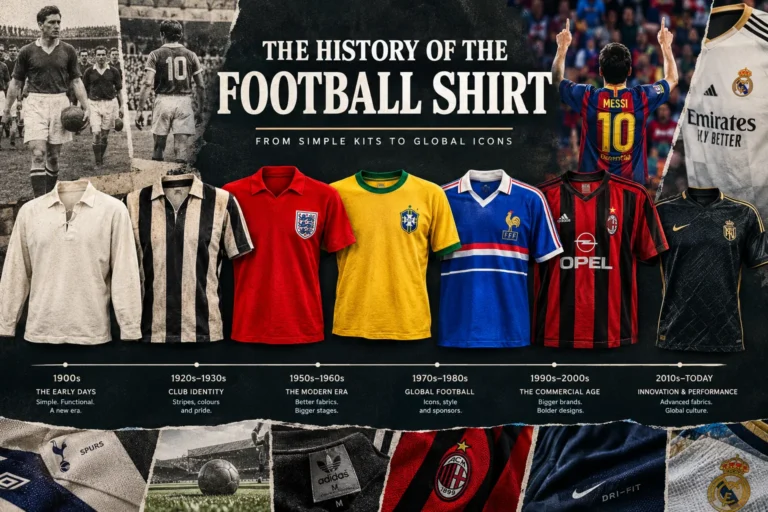





The football shirt is the most widely worn garment in British sport and the least examined. Every element of it — the colour, the badge on the chest, the number on the back, the name of a company across the front, the shape of the collar — arrived at a specific point for a specific reason, and most of those reasons had nothing to do with design.
This page traces the whole thing in one place: where the shirt came from, how each component was added, and what supporters wore alongside it. Each section links to the detailed piece on this site, so you can follow any thread as far as it goes.
Where the football shirt began
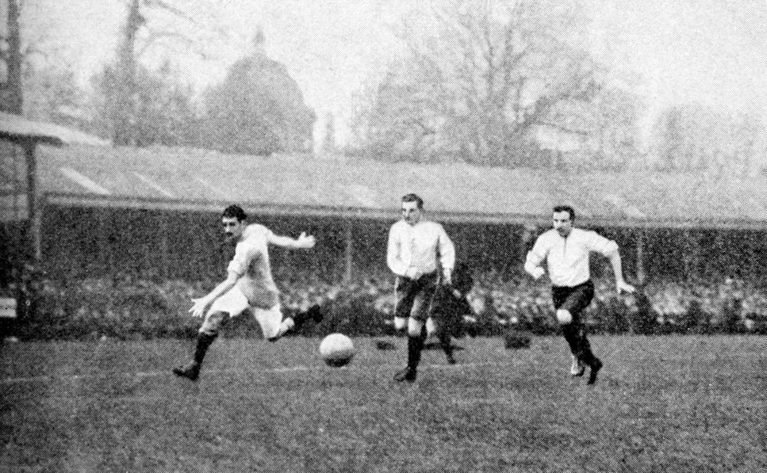
The first football jerseys were knitted wool, in the same tradition as the rugby and cricket garments of the period, produced by the same mills that made hosiery and underwear. They were long-sleeved, collared and heavy, and in the rain they were punishing — wool absorbs a great deal of water, and a soaked jersey on a mud pitch was a significantly heavier garment than the one a player started in.
Cotton replaced wool gradually through the early twentieth century, lighter when dry and easier to dye in strong colours, though still substantial by any modern standard. The shift to synthetics came much later, and with it an entirely new set of problems. Our full account of how football shirts were made before polyester covers the materials and what they meant for the players wearing them.
How did clubs choose their colours?
Almost no club chose its colours for aesthetic reasons. The common sources were the institution that founded the club — a church, a works team, a cricket club, a school — the colours of the local municipality, or simply whatever a supplier had available in quantity when the first set was ordered.
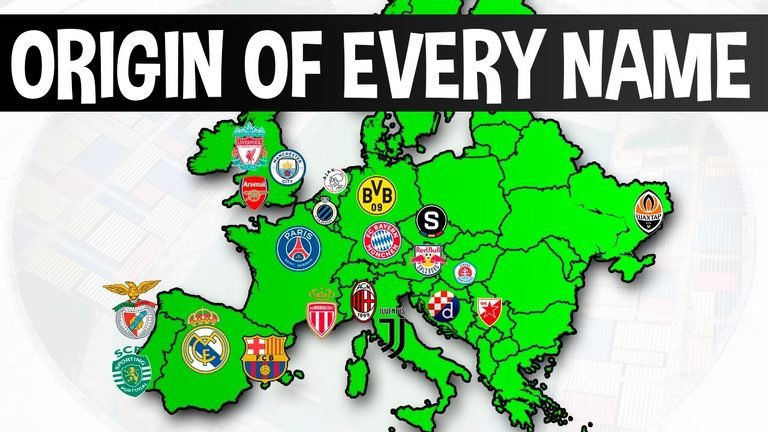
Once chosen, colours proved almost impossible to change. They became the single most protected part of a club’s identity, defended by supporters through every other kind of upheaval, which is why so many English clubs wear combinations that would make no sense to anyone inventing them today. We go through the origins in why football clubs wear the colours they do, and the same Victorian logic explains the names in why football clubs are named the way they are.
The crest arrives on the chest
Badges came later than people assume. Early shirts were plain, and where a club did carry an emblem it was frequently the coat of arms of the town or city rather than anything the club had designed for itself. Crests only became a routine part of the shirt through the middle decades of the twentieth century.
What followed was constant revision. A crest is the one part of a club’s identity that can be redrawn without supporters revolting — unlike the colours or the name — so most clubs have been through several, and the modern trend towards simplified, screen-friendly marks has produced another round. The story of the football club crest traces the pattern, and Arsenal’s red and white is a good case study in how a club’s visual identity settles.
Collars, cuts and the shape of the shirt
The earliest shirts were pulled over the head and closed at the neck with a lace, which was functional rather than decorative: it allowed the opening to be adjusted on a garment with no other fastening. Buttoned and polo collars followed, then the deep V-necks of the nineteen-seventies, then the crew necks that dominate the modern game.
The cut changed alongside the collar, from the boxy, long-sleeved garment of the pre-war period to the fitted, short-sleeved shirt of today. International football drove much of it: sides arriving from Hungary, Brazil and elsewhere in the nineteen-fifties wore visibly lighter, closer-cut kit, and English clubs followed. How the football shirt collar changed follows that evolution in detail.
When did numbers arrive on shirts?
Later than the game itself, and against considerable resistance. Numbers were first used in English league football in the late nineteen-twenties, made compulsory for the FA Cup final in the early thirties, and standardised in the league before the war. The purpose was identification for spectators and the press rather than anything to do with the players.
For decades the number described the position rather than the person: one to eleven, allocated by role, reassigned every match. Squad numbers — a fixed number belonging to a player for a season, with his name above it — arrived with the Premier League in the early nineteen-nineties and changed the shirt into a personal object rather than a uniform. That shift is the subject of how squad numbers changed football shirts, and the way clubs have used numbers as part of their identity shows up clearly in Chelsea’s kits, numbers and eras.
The away kit and the clash rule
Away kits exist because of a rule, not a marketing department. The laws require the two sides to be distinguishable, so a club whose colours clashed with the home side needed a change strip — and for most of football history that was exactly what it was, a single alternative kept for the handful of fixtures that demanded it.
The modern pattern, in which a club releases a new away shirt and a third shirt every season as commercial products in their own right, is a recent development. It is also where all the design freedom went: with home shirts locked to a club’s colours, the alternatives became the only place a supplier could do anything interesting. The story of the away kit covers how a practical necessity became the most adventurous part of the range.
Sponsors across the front
Shirt sponsorship arrived in English football in the nineteen-seventies and was contentious from the start. Broadcasters initially refused to show sponsored shirts, which meant clubs played in unbranded kit for televised matches and sponsored kit otherwise — an arrangement that lasted until the early eighties.
Once accepted, the sponsor became the most reliable way to date a shirt, because deals ran for defined periods and changed more often than suppliers or crests. For collectors it is the first thing to check. The history of the football shirt sponsor sets out how the money and the resistance both worked.
Shirts with a story of their own
Some designs carry more history than others, usually because a club made a decision that stuck. The detailed pieces:
Liverpool’s all-red, adopted in the nineteen-sixties and unchanged since. Tottenham’s white shirt and the cockerel, one of the oldest continuous identities in the game. Newcastle’s black and white stripes, worn since the end of the nineteenth century. Leeds United’s all-white, borrowed deliberately from Real Madrid, with a companion guide to dating a Leeds shirt by its details.
Two more for clubs whose colours are more distinctive than their trophy cabinets: Hull City’s black and amber, and the broader question of which Premier League jerseys are most popular and why.
What did supporters wear before replica shirts?
The shirt is only half of it. For most of football’s history, supporters did not wear replica kit at all — it did not exist as a product until the nineteen-seventies — and identified themselves with objects they bought outside the ground or made at home.
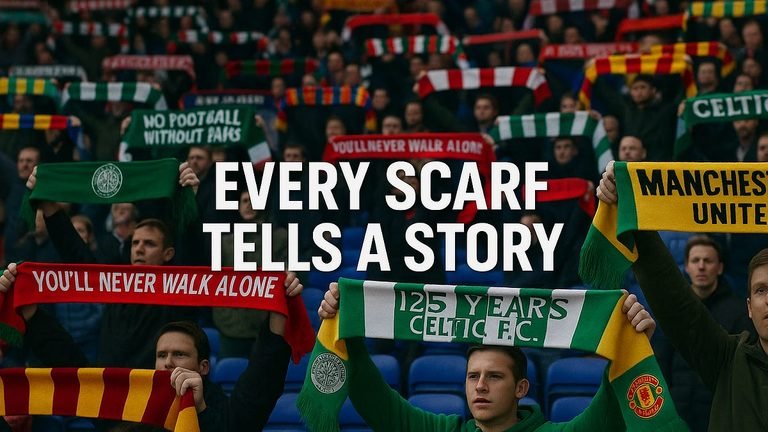
The rosette came first, borrowed from racing and from political campaigning. The scarf followed, knitted at home in club colours long before anyone manufactured one commercially, and became the central object of terrace culture: worn, held aloft, twirled, and covered in sewn-on badges accumulated over decades. The story of the football scarf traces it from Victorian colours to the half-and-half argument.
Two other traditions are worth recording. The captain’s armband has a shorter and stranger history than its status suggests, and the matchday programme is the one part of the ritual now genuinely disappearing.
The modern era and the retro market
The replica shirt turned the kit into a consumer product, and the consequences arrived quickly: annual releases instead of multi-year designs, third kits as standard, and a secondary market in older shirts that is now substantial in its own right.
That market is where most of this history is actually encountered. People buy a shirt because of a season they remember, and then learn to read collars, crests, sponsors and number fonts in order to buy the right one. The retro football shirt market covers how it works and what distinguishes a faithful reproduction from a modern blank with an old design printed on it.
The ball changed alongside the shirt, and arguably more dramatically — from a leather casing over an animal bladder to a thermally bonded sphere with a sensor inside. How the football itself has changed follows that story. For period shirts seen up close, the National Football Museum holds the best collection in the country.
Frequently asked questions
When did football shirts first have numbers?
In English league football, the late nineteen-twenties, becoming compulsory for the FA Cup final in the early thirties. Numbers originally described the position rather than the player; fixed squad numbers with names arrived with the Premier League in the early nineties.
Why do away kits exist?
Because the laws require the two sides to be distinguishable. For most of football history a club kept a single change strip for fixtures where its normal colours clashed; the modern annual away and third kit is a commercial development.
When did shirt sponsors appear in English football?
In the nineteen-seventies, though broadcasters refused to televise sponsored shirts at first, so clubs changed kit for televised matches until the early eighties.
What is the easiest way to date an old football shirt?
The sponsor, then the supplier’s logo, then the crest treatment and the collar shape. Those four together will place almost any shirt within a season or two.
About the Author