





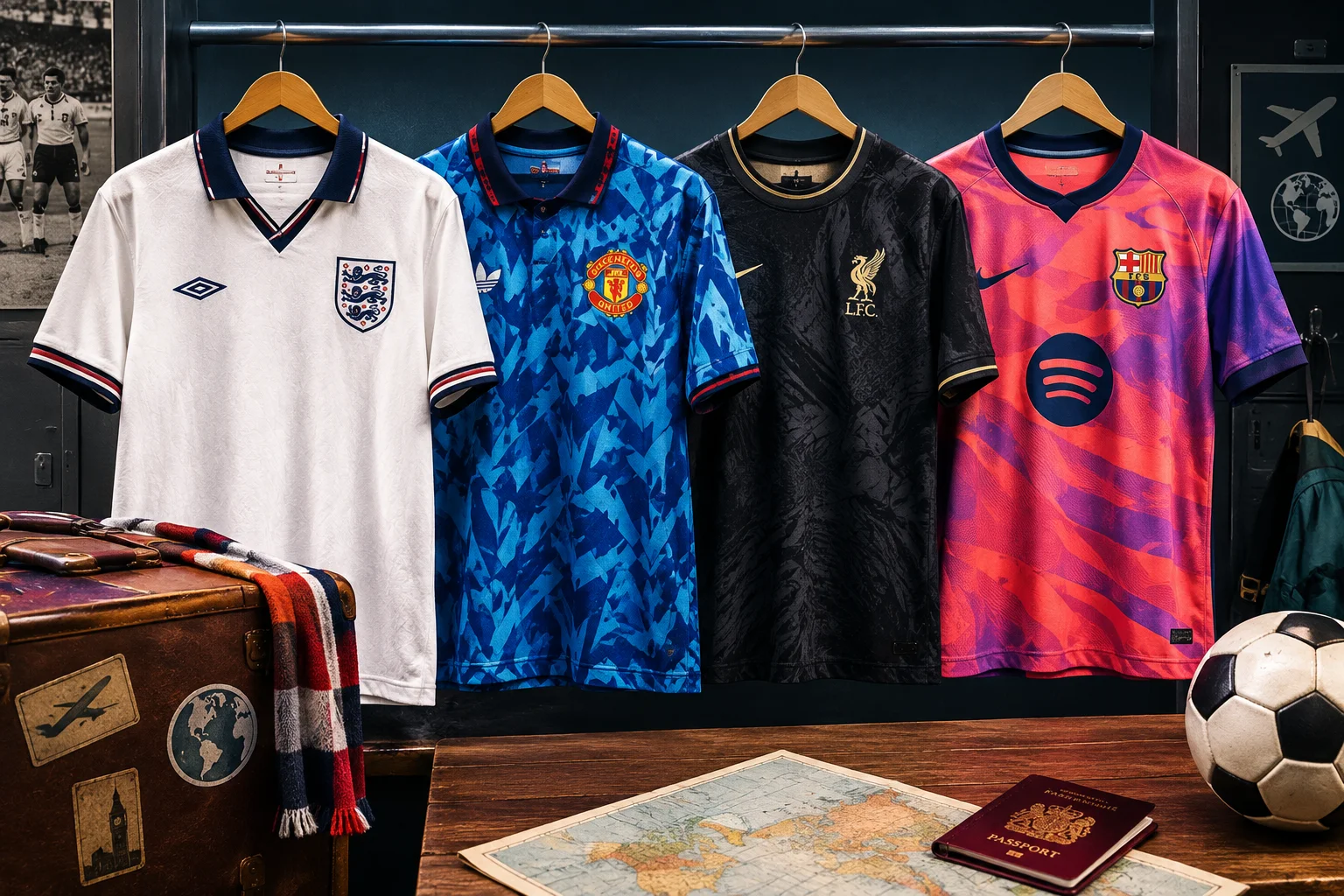
Every club has a home kit that means something. Far fewer have an away kit that does. Yet the away shirt is where football’s most memorable designs have appeared, where clubs have experimented with colours they would never risk at home, and where a surprising number of the shirts collectors most want were born.
The away kit started as a rule. It became something else entirely.
Why did away kits exist at all?
To solve a problem the early game ran into immediately: two teams in similar colours.
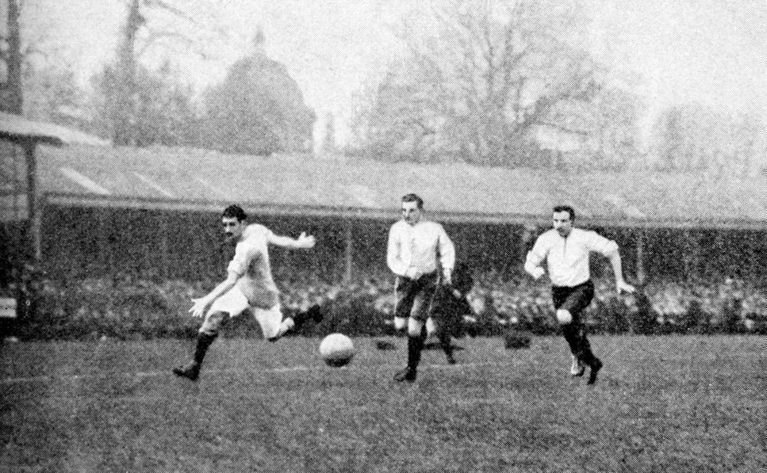
In the nineteenth century, clubs chose their colours independently and many landed on the same ones. When two sides in red met, or two in blue, the match was hard to follow for players, officials and spectators alike. Competitions introduced rules requiring the visiting team to change if a clash occurred, and clubs began keeping a second set of shirts for the purpose.
Those early change kits were plain and functional. A club in red might keep a set of white shirts, worn only when required and given no thought beyond that. Nobody bought them, because there was nothing to buy.
When did the away kit become a design in its own right?
Gradually through the mid-twentieth century, and decisively once shirts became products.
As replica shirts began to be sold to supporters from the 1970s onwards, the away kit stopped being a spare and started being a second thing a club could sell. That gave manufacturers a reason to design it properly, and it gave them a freedom the home shirt never offered. The home colours were fixed by tradition. The away colours were fixed only by the need to differ from them.
By the 1980s and 1990s, the away kit had become the place where designers took risks, and some of those risks produced shirts that are still talked about.
Why do away kits take more risks?
Because the commercial downside is smaller and the creative brief is wider.
A home shirt has to be instantly recognisable and must not alienate the supporters most likely to buy it. Radical change is dangerous. The away shirt carries none of that weight. It sells in smaller numbers, it is worn less often, and supporters expect it to be different. Designers can use colours with no connection to the club, revive patterns from decades earlier, or try something nobody has seen before.
Not every experiment works. But the ones that do become iconic in a way a home shirt rarely can, precisely because they stand apart.
Which away kits changed the way people thought about them?
A handful from the late 1980s and early 1990s reset expectations across the game.
That period produced away shirts in colours and patterns that had never appeared on a football pitch: geometric prints, unusual colour combinations, and designs that owed more to fashion than to football tradition. Supporters were divided at the time. Decades later, many of those shirts are among the most sought after in the retro market, and reproductions of them sell steadily.
The lesson manufacturers took was that boldness on an away kit was rewarded, eventually, even when it was mocked at first.
Has the clash rule itself changed?
It has become more precise, and it now covers more than the shirt.
Modern regulations consider the whole kit, including shorts and socks, and require sufficient contrast for players, officials and broadcasters. Referees have discretion over which team changes, though convention still puts the burden on the visitors. Competitions also require clubs to register their kits in advance, and clashes are resolved before matchday rather than on it. That planning is why a team occasionally wears its away kit at home, or its third kit against a side its away kit would have suited: the decision was made weeks earlier, on paper.
How do third kits fit in?
They arrived when European competition and expanding replica sales gave clubs a reason for a third option.
A club playing across several competitions might face opponents whose colours clashed with both its home and away kits, so a third became practical. It also became another product to sell. Third kits took the away kit’s freedom a step further, sometimes using colours with no connection to the club at all, and became the most experimental part of the range.
Their scarcity, since they sell in the smallest numbers, is part of what makes older third kits so valued by collectors.
What does an away kit say about a club?
More than the home kit, in some ways, because it is a choice rather than an inheritance.
A club that wears the same away colour for decades is saying something about tradition. A club that changes it every year is saying something about commerce. Clubs that use the away kit to reference their city, their history or a famous season are telling supporters what they think matters. The home shirt was decided long ago. The away shirt is decided now.
Our piece on how Liverpool’s all-red kit came about shows how deliberate a home colour decision can be. Away kits are where that kind of decision gets made every couple of seasons.
Do away kits ever become home kits?
Occasionally, and it says something when they do.
A few clubs have adopted an away colour as their home colour after it proved popular, or revived a successful away design as a future home shirt. More often, an away kit becomes so associated with a famous season that supporters regard it as the club’s true colours for that era, whatever the home shirt looked like. That is the highest compliment an away kit can receive: to stop being the change strip and become the shirt people remember.
Why do collectors love them?
Scarcity and distinctiveness, together.
Away shirts are made in smaller numbers than home shirts, they change more dramatically between seasons, and the good ones stand out from a crowd of similar home kits. That combination means an away shirt from thirty years ago is both rarer and easier to identify than the home shirt from the same season. For anyone collecting, that is exactly the right combination.
The away kit, in the end, is the part of football’s visual history that was never planned. It grew from a rule about colours into the most inventive corner of the game’s design, and the shirts people hunt for decades later are disproportionately the ones that were only ever meant to be worn when the home kit could not be.
Frequently asked questions
Why do football teams have away kits?
Originally to avoid colour clashes when two teams in similar colours met. The visiting team was required to change, so clubs kept a second set of shirts.
When did away kits become popular to buy?
From the 1970s onwards, as replica shirts became products, giving manufacturers a reason to design away kits properly rather than treating them as spares.
Why are away kits often bolder than home kits?
Because the home shirt is fixed by tradition and commercial risk, while the away shirt only has to differ from it, giving designers far more freedom.
About the Author


1 thought on “The Story of the Away Kit: From Clash Rule to Design Playground”