


Asking what a sporting director actually does produces different answers at different clubs, which is part of why the role is misunderstood. The title varies director of football, technical director, head of football operations and so does the authority attached to it.
At its core, though, the job is consistent: own the football strategy above the level of the head coach, so that the club has a direction that survives a change of manager.
The problem the role solves
English football ran for a century on the manager model. One man picked the team, bought the players, managed the staff, dealt with the press and in some cases ran the youth system. When he left, all of it left with him.
The consequence was discontinuity. A new manager arrived, wanted different players, discarded half the squad his predecessor had assembled, and the club began again sometimes every two years. Over a decade that produces enormous waste and no accumulated advantage.
A sporting director exists to hold the parts that should not change: how the club plays, what sort of player it signs, what the academy produces, how contracts are structured. The head coach then works within that rather than replacing it.
What is actually on the job description?
Four things, in rough order of importance. Recruitment strategy not individual signings so much as the process, the data and scouting operation, the age profile of the squad and the balance between buying and developing.
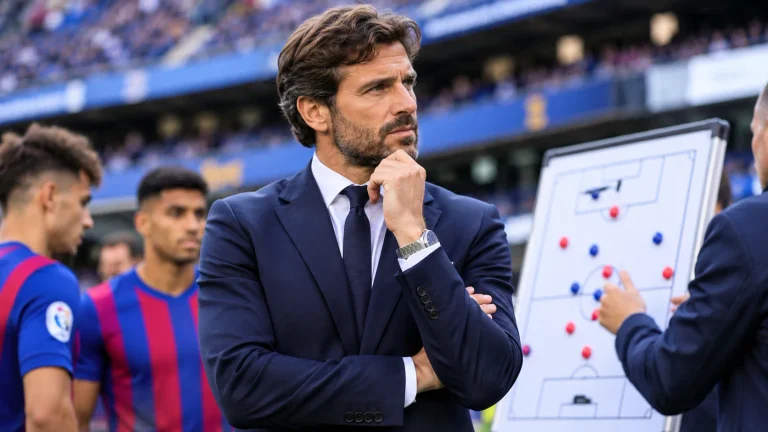
Hiring and, when necessary, removing the head coach. This is the part that sits least comfortably with English tradition and is the clearest expression of where the authority lies: the coach reports to the director, not the other way round.
Contract management across the squad, which is a quieter and larger job than it sounds. Letting a valuable player run into the final year of his deal destroys value, and preventing that is a planning function rather than a negotiating one.
And the academy’s relationship with the first team ensuring that the pathway exists in practice rather than on a diagram, which usually means pressure on a head coach to pick young players he would rather not risk.
Why English clubs resisted it
Because it cut across the manager’s authority, and English managers had held that authority since the game turned professional. The first attempts to introduce the role produced open conflict, several high-profile resignations and a widespread view that it was a continental fashion that would not work here.
There was also a credibility problem. The early appointments were sometimes made for the wrong reasons, to people without the standing to challenge a strong manager, which produced exactly the dysfunction the critics predicted and set the idea back years.
What changed the argument was results. Clubs operating the structured model began to outperform their resources consistently, and the pattern was clear enough that the objection shifted from whether to have one to how to make it work.
Where does the structure go wrong?
Two failure modes, both common. The first is an unclear split of authority: a head coach who believes he decides signings and a director who believes the same thing produces paralysis in a transfer window and a public row shortly afterwards.
The second is a director who recruits to a philosophy the coach cannot use. A squad assembled for possession football handed to a coach who presses and counters is a waste of both, and it happens whenever the appointment sequence runs backwards coach first, strategy second.
The clubs that get it right are explicit about the split before anyone signs anything, and they appoint coaches who fit the existing strategy rather than asking the strategy to bend. That sounds obvious and is rare, because a club under pressure hires the best available coach rather than the right one. The scouting operation beneath all of this is a separate discipline, as the tactical shifts in why some football positions disappeared show.
Where the title came from
The role arrived in England from continental Europe, where the separation between coaching and football administration had been standard for decades. In much of Europe the head coach was always a coach responsible for training and selection while the club’s football direction sat elsewhere, with a technical department that outlasted him.
That difference is partly linguistic and partly historical. English clubs produced the all-powerful “manager” because the job grew out of secretary-manager roles in the Victorian game, where one person genuinely did run everything. Continental clubs built structures instead, and the words followed.
Which is why the imported title still sits awkwardly here. “Sporting director” describes a function English football did not have a word for, and the resistance to the role was partly resistance to admitting the function was needed. Club identity has absorbed plenty of imports before, as premier league jerseys ranked by popularity shows in a different register.
How it looks from outside
Mostly invisible, which is the point. A well-run football department produces signings that make sense in sequence, a squad with a sensible age distribution, academy players appearing in the first team, and no panic in the final week of a window.
The visible moments are the bad ones: a manager sacked, a window missed, a public disagreement. Supporters consequently learn the sporting director’s name when something has gone wrong, which gives the role a worse reputation than its record deserves.
There is a reporting problem underneath this. Football coverage is organised around managers, because managers give press conferences and directors generally do not, so the public account of a club’s decisions is filtered through the person with least authority over the strategy. That is why a signing is described as the manager’s when it frequently was not.
The honest test is continuity. A club that has changed head coach three times in five years and still plays recognisably the same way, with a squad that fits, has a functioning structure. A club that reinvents itself with each appointment does not, whatever the job titles say.
The smaller-club version
Below the top divisions the role exists under different names and with fewer resources, often combined with other functions, and the priorities invert. Selling well matters more than buying well, because player sales are a primary income stream rather than a squad adjustment.
That makes contract management the central skill. A club whose business model is developing and selling players cannot afford to let any of them approach free agency, and the difference between a director who manages that and one who does not is measured directly in transfer income.
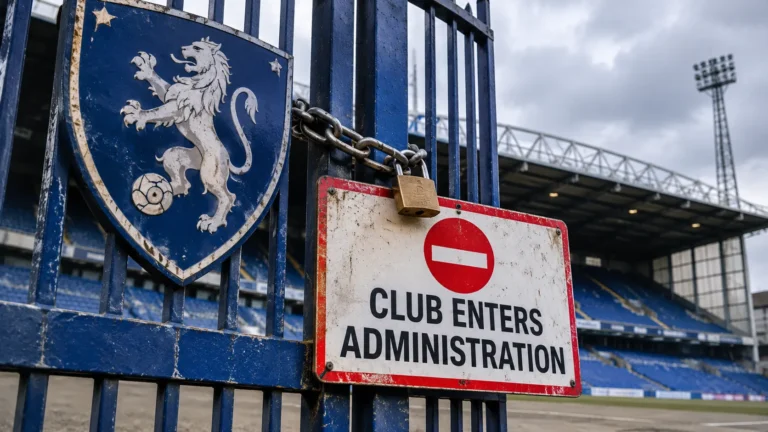
It also makes the academy the main asset rather than a pathway, which changes how the whole department is organised. The calendar those departments plan around is its own obstacle, covered in why English football has no winter break. Clubs that have survived insolvency often rebuild around exactly this, as what happens when a football club goes into administration describes.
Frequently asked questions
Does the sporting director pick the team?
No. Team selection belongs to the head coach. The director owns the strategy the coach works within, including recruitment and the coach’s own appointment.
Why did English football resist the role?
Because it reduced the manager’s authority, which had been total since the game turned professional. Early appointments were also sometimes made badly, which discredited the idea for years.
What is the difference between a director of football and a sporting director?
Mostly nothing. The titles vary by club and country; what matters is the authority attached, which differs far more than the job title does.
How can you tell if a club’s structure is working?
Continuity. If a club changes head coach and still plays recognisably the same way with a squad that fits, the structure is doing its job.
About the Author