

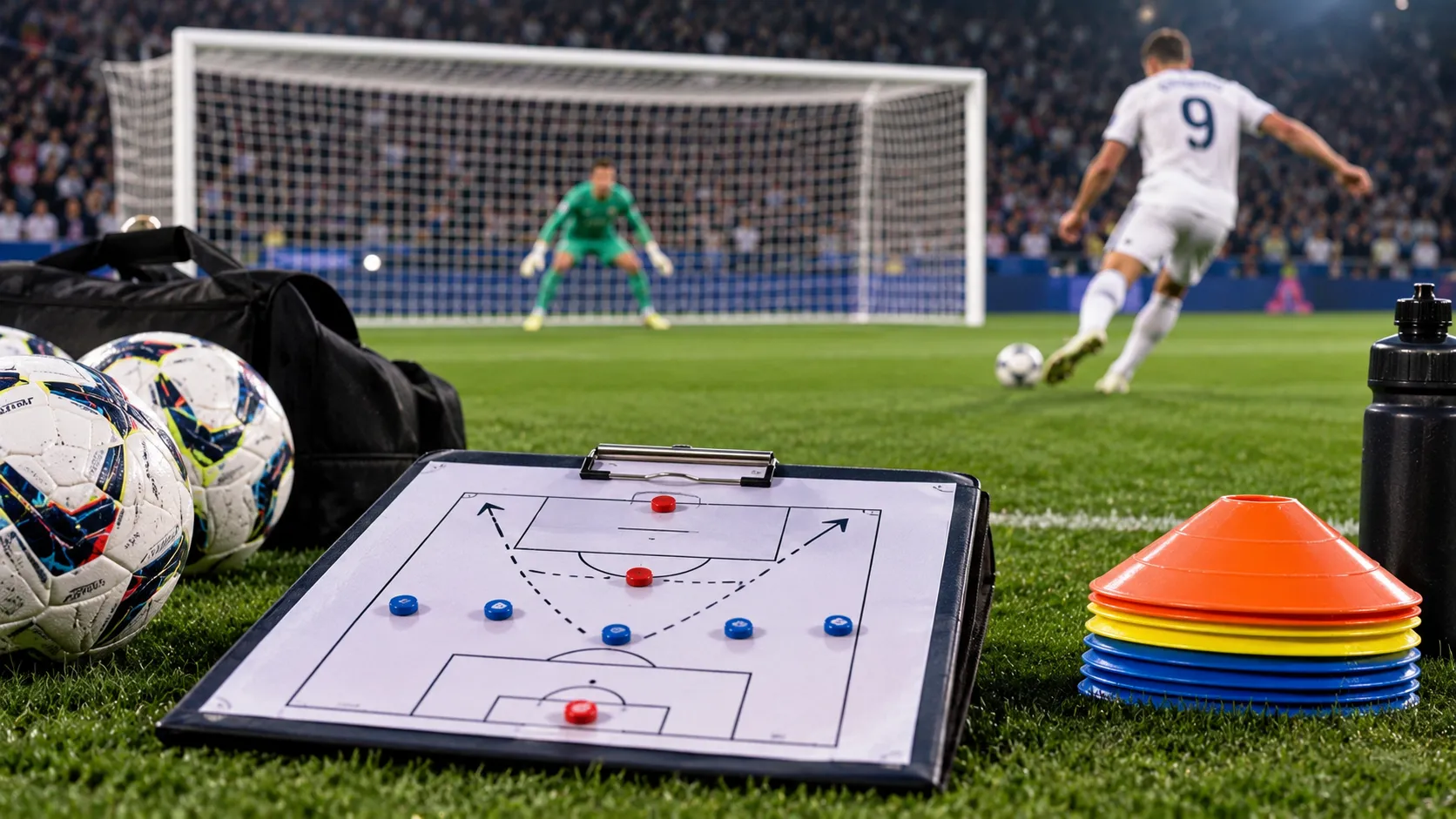
For most of their history shootouts were treated as a lottery, and understanding how penalty shootouts are prepared for now means understanding how completely that view has been abandoned. Serious preparation has become standard, and the clubs and nations that do it properly have noticeably better records than they used to.
The preparation divides into three parts: who takes them and in what order, how the kicks are struck, and what the goalkeeper does.
The laws, briefly
Shootouts were introduced in the 1970s to replace replays and the drawing of lots, and the procedure is set out in the Laws of the Game, maintained by the IFAB. Five kicks each, alternating, then sudden death.
One significant change came in 2019, when the requirement on goalkeepers was relaxed from having both feet on the goal line to having at least one foot on or in line with it. That is a meaningful difference, because it permits a step that was previously an offence.
Alternative formats have been trialled. A tennis-style sequence intended to remove any advantage from kicking order was tested in youth and secondary competitions and not adopted, largely because it confused everyone involved.
Who takes them, and in what order
The old approach was to send the five most confident players in whatever order felt right, usually saving the best taker for the fifth. Current practice is close to the opposite.
The reasoning is that the fifth penalty is frequently not taken, because the shootout has already been decided. Putting your best taker fifth means there is a reasonable chance he never kicks, which is an obvious waste of your strongest asset.
So the modern convention is to front-load: the best takers first and second, the most reliable rather than the most spectacular. The fifth slot goes to someone dependable, and the rule for sudden death is that nobody who does not want to take one should be made to.
Does kicking first matter?
This is the most argued-about question in the field and the answer has moved. Early research found a substantial advantage to the team kicking first, attributed to the psychological pressure on the side that is always behind.
Larger subsequent studies have found the effect considerably smaller, and some have found no reliable advantage at all. The honest position is that if an advantage exists it is modest, and the confident claims made about it in the 2010s were based on sample sizes that did not support them.
What is not disputed is that teams prefer to kick first when they win the toss, and that the preference is close to universal. Whether that reflects a real edge or a shared belief is exactly what the research has struggled to separate.
Which technique works better?
Keeper-independent means choosing a target before the run-up and hitting it regardless of what the goalkeeper does. The advantage is that it cannot be read; the disadvantage is that if the keeper guesses correctly, he saves it.
Keeper-dependent means waiting, reading the goalkeeper’s movement, and going the other way. The advantage is that a committed keeper is beaten; the disadvantage is that it requires striking the ball late and accurately under enormous pressure, and a keeper who does not commit leaves the taker with nothing.
Most coaching now favours keeper-independent for the majority of takers, on the basis that it is more repeatable under stress and can be practised to a reliable standard. Keeper-dependent is left to players who are genuinely good at it, which is a small number.
The goalkeeper’s problem
Harder than it looks, and distorted by an identifiable bias. Research into shootout behaviour has found that goalkeepers dive far more often than staying central would justify, and that staying central produces better outcomes than its frequency suggests.
The explanation offered is that a keeper who dives and is beaten looks like he tried, while one who stands still and is beaten looks like he did nothing. The incentive is to appear active, and that incentive pushes against the optimal strategy.
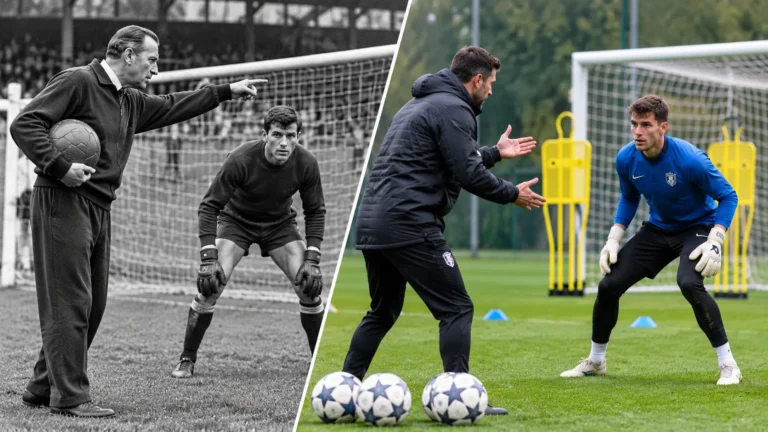
Preparation for keepers therefore concentrates on two things: data on individual takers’ tendencies, and the discipline to act on the data rather than on instinct. Several of the most successful shootout goalkeepers of recent years have been noticeably willing to stay up and wait.
Can you actually practise it?
Only partly, and the limitation is the honest caveat on everything above. Technique can be drilled to a high standard in training. The physiological state of a player who has run for a hundred and twenty minutes and is about to walk sixty yards in front of fifty thousand people cannot be reproduced.
Clubs do what they can. Penalties are taken at the end of sessions when players are tired rather than fresh. Some sides introduce artificial pressure crowd noise, consequences for missing, teammates watching rather than warming down. The evidence that any of it transfers is thin but the logic is sound.
What is clearly practisable is the procedure. The order, the walk, the routine at the spot, who speaks to whom and when all of that can be rehearsed to the point of being automatic, and automatic is exactly what you want when conscious thought is the enemy.
So the realistic claim is modest and worth making. Preparation does not make a shootout predictable; it removes the avoidable failures, which over a number of shootouts is the difference between a poor record and a good one.
What else gets prepared
The walk. Research into shootout outcomes has highlighted the period between leaving the halfway line and placing the ball as a point where things go wrong, and sides now rehearse it a set routine, a fixed time, no deviation.
The response to the previous kick. Teams prepare what happens after a miss, because the next taker is walking up having just watched a teammate fail, and leaving that moment unrehearsed is leaving the hardest part to chance.
And the goalkeeper’s preparation specifically, including who holds the notes on each opposition taker and when he looks at them. Referees have become stricter about delays, so the information has to be absorbed before it is needed. The officiating side of all this is covered in how football referees are appointed and assessed.
Why preparation actually helps
Because the thing that fails in a shootout is not technique but the execution of technique under stress, and stress is partly addressed by removing decisions.
A taker who knows his target, his run-up and his position in the order has three fewer things to think about on the walk. A goalkeeper who knows what the data says about the man in front of him has one fewer. That is the entire mechanism, and it is enough to move the odds.
The nations and clubs whose shootout records have improved are the ones that stopped treating it as a lottery, and the improvement is the strongest practical argument that it never was one. The same principle applies to pitch preparation, which is also quietly decisive and almost never noticed the subject of how football pitches are maintained.
Frequently asked questions
Should the best taker go first or last?
First or second, under current thinking. The fifth penalty is frequently never taken because the shootout is already decided, so saving your best taker for it wastes him.
Is there an advantage to kicking first?
Early research suggested a substantial one. Larger studies have found the effect much smaller or absent, so the honest answer is that any advantage is modest.
What is keeper-independent technique?
Choosing a target before the run-up and hitting it regardless of the goalkeeper’s movement. It is more repeatable under pressure than reading the keeper and is now the standard coaching approach.
Do goalkeepers dive too often?
The research suggests yes. Staying central performs better than its frequency implies, but a keeper who stands still and is beaten appears not to have tried.
About the Author