



Nobody discusses the pitch unless something is wrong with it, which is a reasonable measure of how well the job is being done. Understanding how football pitches are maintained explains one of the largest changes in the professional game over thirty years, and it happened almost entirely without comment.
The surfaces players now play on bear very little relation to the mud of the seventies and eighties, and the difference is engineering rather than luck.
What a modern pitch actually is
Most top-level pitches are no longer pure grass. They are hybrid surfaces: natural grass grown through a base into which artificial fibres have been stitched, typically making up a very small percentage of the surface by volume.
The fibres do two things. They hold the root zone together, so the turf does not tear away in divots under load, and they provide a consistent surface even where the grass itself has been worn thin.
Underneath sits an engineered construction drainage layers, a sand-based root zone, irrigation and in most cases undersoil heating. The whole thing is a built structure with grass on top, not a field that happens to be flat.
Why hybrid surfaces took over
Because the alternatives both failed. Pure grass at the intensity of modern use matches, training, concerts, international fixtures breaks down by December in a northern climate. Fully artificial surfaces were rejected by players and by competitions at the top level for how they played and how they affected injury risk.
Hybrid construction solved the durability problem while keeping the playing characteristics of grass, and it did so at a cost high enough that it took two decades to become standard.
The playing consequence is a faster, truer surface. Passing accuracy across the professional game has risen for several reasons and the pitch is one of them, because a ball that runs predictably is a ball that can be passed hard and flat.
Grow lights and the shade problem
Modern stadiums have a design flaw from the grass’s point of view: the stands block sunlight. A bowl with a tall roof means large parts of the pitch receive very little direct light for months at a time, and grass does not grow in shade.
The answer is mobile lighting rigs, which are wheeled across the pitch for hours at a time through the winter, supplying artificial light and a small amount of heat to the areas that need it most. They are expensive, slow and entirely necessary.
The areas that suffer are predictable: in front of the goals, along the touchlines beneath the tallest stands, and in the corners. Those are also the most heavily used parts of the pitch, which is why they get the rigs and still look worst in February.
What happens in a week
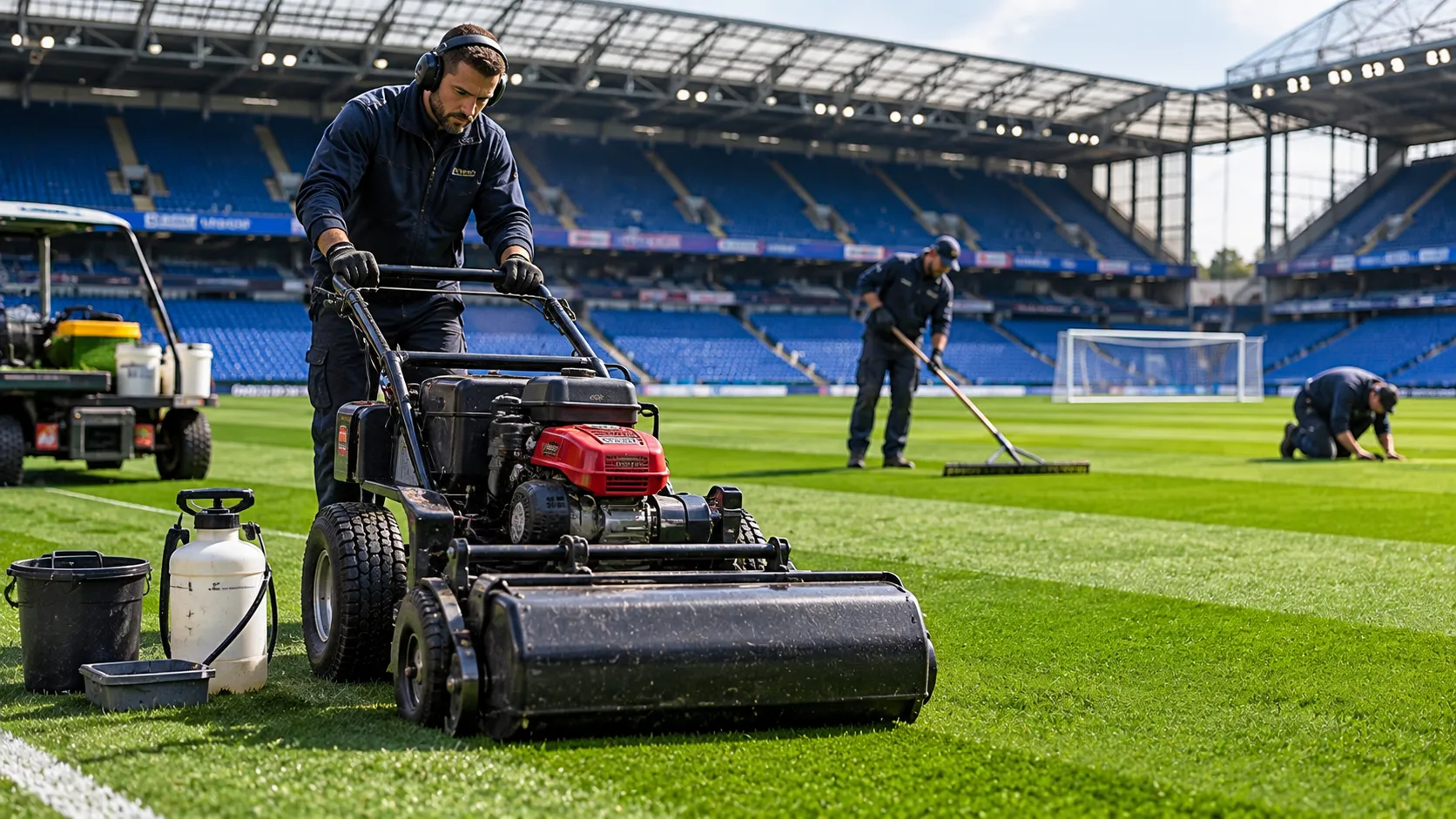
A great deal more than mowing. Pitches are cut several times a week, often daily during the growing season, with the pattern changing direction to keep the grass standing upright.
Then verti-draining and aeration, which puncture the root zone to relieve compaction and allow water and air through. Then topdressing with sand, overseeding to replace worn grass, and rolling to restore level.
Match-day itself has its own routine, including watering before kick-off and at half time. That is done to speed the ball rather than to help the grass, and the amount is a deliberate choice some managers request a heavily watered surface and the laws permit it as long as it is even.
Does the pitch really affect the football?
Substantially, and in ways that are easy to miss. A faster surface rewards passing sides and punishes defences that sit deep, because the ball arrives sooner than defenders expect.
A heavy or uneven surface does the opposite, reducing the value of technique and increasing the value of physical play. Sides built on passing have historically struggled in winter at grounds with poor drainage, and the improvement in surfaces across the game has quietly favoured technical football everywhere.
Watering is the most direct form of this. A home side that wants the ball to move quickly waters heavily; one that wants to slow a technical opponent does not, and both are within the rules. It is the most legal and least discussed form of home advantage available.
What happens in the summer rebuild?
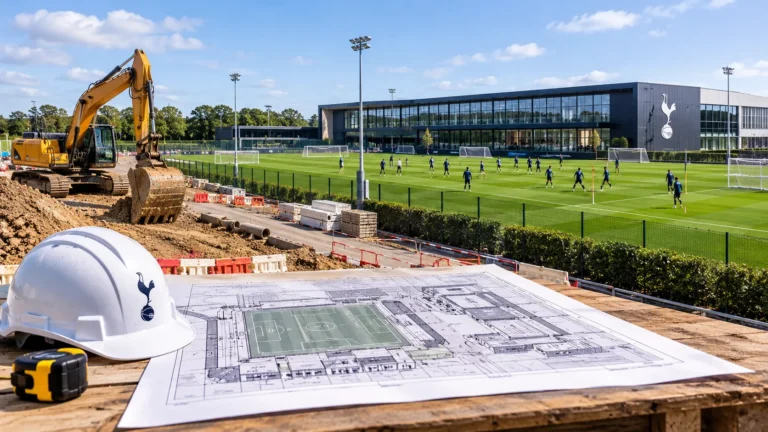
Every ground does it, every year. The surface is stripped, the root zone reworked or replaced, and new turf laid frequently within a few days, using large rolls grown off-site to order.
The timing is brutally tight. A season that ends in late May and begins in early August leaves perhaps eight weeks, during which the new surface has to root well enough to take senior football. Grounds that host summer events have less.
This is why pre-season fixtures are sometimes played elsewhere, and why a ground occasionally opens the season with a surface that looks newly laid. It was, a fortnight earlier. The equipment used on it has changed as much as the surface has, which is covered in how the football itself has changed.
Why away pitches used to matter more
An underrated change in the game, and one that has quietly removed a form of home advantage that was once substantial.
Through the seventies and eighties, pitch quality varied enormously between grounds. Some surfaces were genuinely poor by December and remained so until April, and a technical side travelling to one of them was deprived of most of what made it good. Results reflected that, and so did team selection managers picked differently for certain away trips, and said so.
Standardisation has largely ended it. Construction standards, drainage requirements and competition rules have narrowed the variation to the point where a visiting side can expect broadly the same surface everywhere in a top division.
What remains is at the margins: watering, grass length and how firm the surface is rolled, all of which a home groundsman controls within the rules. These are real effects and they are small compared with what a muddy pitch used to do, which is why the complaint has largely disappeared from post-match interviews.
The people doing it
Groundstaff are a small and highly specialised profession, and the head groundsman at a professional club is managing a horticultural operation with a fixed and unforgiving schedule.
The job has become considerably more technical. Soil science, irrigation management, light measurement, turf disease and the operation of heating and lighting systems are all part of it, and the qualifications now reflect that.
It is also one of the few roles in football where success is invisible. A perfect pitch generates no comment at all, which is the point, and the only feedback available is the complaint that arrives when something fails. The one position that interacts with the surface most is in goal, where footing decides almost everything and the coaching of it has changed completely, as discussed in how goalkeeping coaching changed.
Frequently asked questions
Are top pitches real grass?
Mostly hybrid: natural grass grown through a base containing stitched artificial fibres, which hold the root zone together and stop the turf tearing away.
Why are grow lights needed?
Because stadium stands block sunlight for months at a time, and grass will not grow in shade. Mobile rigs supply artificial light to the worst-affected areas through winter.
Why is the pitch watered before kick-off?
To speed the ball up. It is a deliberate choice within the laws, and some managers request a heavily watered surface for exactly that reason.
How often is a pitch replaced?
Most professional grounds rebuild the surface every summer, laying new turf within a few days and leaving it to root before pre-season.
About the Author