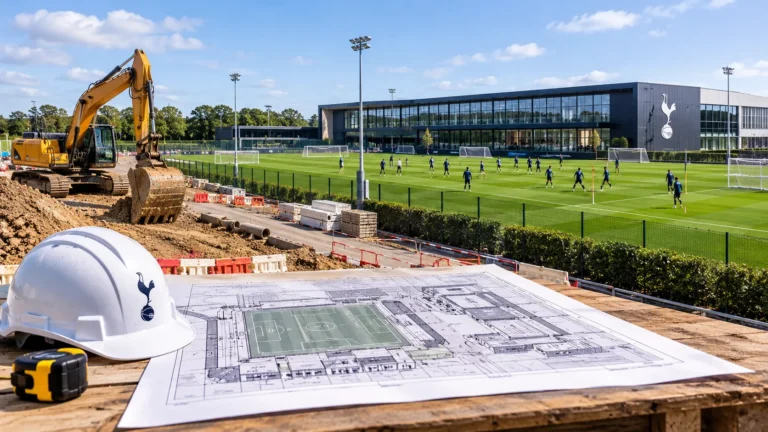



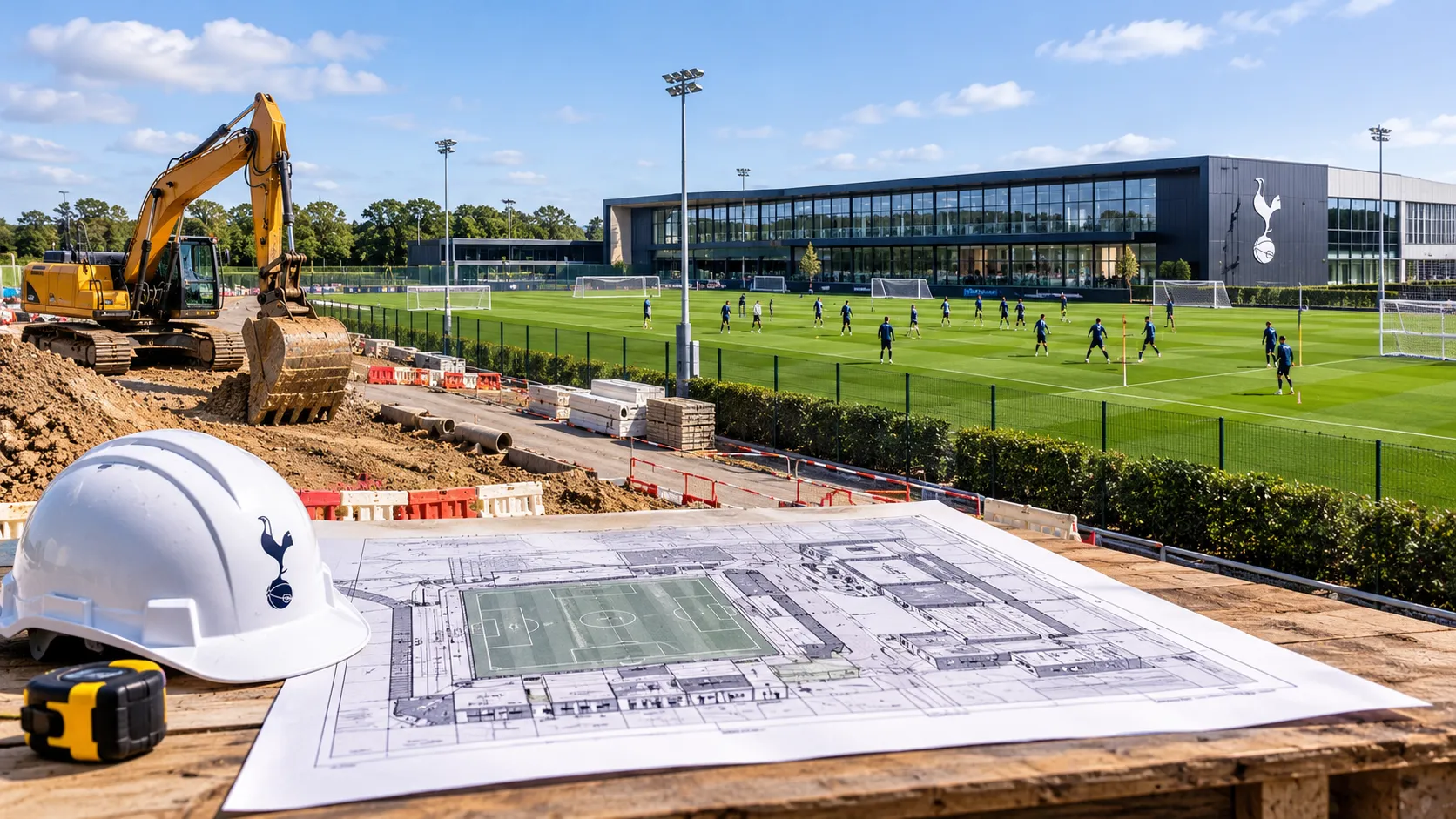
Over the last two decades almost every established English club has either built a new training facility or substantially rebuilt an old one, and the reasons why football clubs build new training grounds are mostly not the ones supporters assume.
It is not primarily about the first team. The academy requirements, the recruitment advantage and the medical provision do more to justify the spending than anything that happens in a senior training session.
The academy requirement
The single largest driver. English academy football operates under a tiered system, and the top category carries specified requirements covering facilities, pitch provision, coaching ratios, education and contact hours.
Meeting those requirements is not optional for a club that wants to recruit at the highest academy level, because category status determines which players a club can sign and from where. A club that drops a category loses access to a tier of recruitment.
The practical consequence is that a facility has to provide multiple full-size pitches, indoor provision, classroom space, medical facilities and in some cases accommodation. That is a campus rather than a training pitch, and it cannot be retrofitted onto a site built in 1975.
How much does it help recruitment?
The reason clubs talk about facilities in transfer announcements. A player choosing between offers looks at the training ground, because it is where he will spend almost all of his working life matches are a small fraction of a professional’s hours.
It matters more for signings from abroad and for younger players, and it matters for staff as much as players. A sports science department, an analysis operation and a medical team all assess whether the facility lets them do their jobs, and good practitioners have choices.
The effect is hard to quantify and clubs behave as though it is real. Several have cited facilities as decisive in signings they would otherwise not have made, which is self-interested testimony and consistent with how players describe the decision.
Does it actually reduce injuries?
Partly, and the mechanism is specific rather than general. Better pitches mean more consistent surfaces, which reduces the variability in loading that contributes to soft-tissue problems.
Indoor provision matters more than it sounds. A session that would have been cancelled or moved to a hard surface in bad weather can go ahead as planned, and the continuity of training load is one of the better-supported factors in injury prevention.
On-site medical and rehabilitation facilities shorten recovery, mainly by removing travel and scheduling friction. A player who can do three rehabilitation sessions a day on site does more work than one travelling to a clinic, and over a six-week injury that difference is substantial.
The commercial element
Smaller than the other factors and not negligible. Training facilities carry naming rights at some clubs, host corporate events, and are increasingly used to produce media content, which has become a meaningful part of a club’s commercial output.
Centralising operations also saves money over time. Clubs that previously ran separate first-team and academy sites were duplicating staff, pitches and equipment, and consolidation reduces running costs even as it raises capital spending.
Community provision is frequently part of the planning case rather than the business case. Public pitch access, school programmes and facility sharing are what gets a development approved, and they are genuine obligations once agreed.
What the first team actually gains
Less than the capital cost implies, which is worth saying plainly because it is the justification clubs lead with publicly.
A senior squad needs good pitches, a gym, a medical suite and somewhere to eat and meet. An adequate older facility provides all of that, and the marginal gain from a new one is real but modest more consistent surfaces, better recovery provision, and the removal of daily friction that costs everyone fifteen minutes.
Where the gain is clear is in continuity. Facilities that let a session go ahead exactly as planned, in any weather, at any time of year, produce a more consistent training load, and consistency of load is one of the better-evidenced inputs to both performance and injury prevention.
What a new facility does not do is improve a squad. Clubs that have built excellent training grounds and recruited poorly have finished exactly where their squads deserved, which is the obvious point and the one most easily lost in a launch video. Infrastructure removes excuses; it does not supply players, and no amount of hydrotherapy has ever turned an average squad into a good one.
What it costs
Tens of millions of pounds for a full facility at the top level, which is comparable to a significant transfer and is accounted for completely differently. A training ground is a capital asset depreciated over decades; a player is amortised over a contract.
That accounting distinction is why clubs under financial pressure sometimes build. Capital spending on infrastructure is treated differently from spending on wages under profit and sustainability rules, which makes a training ground a more permissible use of money than a squad addition.
The risk is the familiar one. A club that commits to a large capital project on the strength of current revenue, and then suffers relegation, has a fixed obligation against a reduced income which is the sequence described in what happens when a football club goes into administration.
Why the sites are where they are
Land availability, almost entirely. A facility needs a large contiguous site with good drainage, road access and planning permission, and those are not found in city centres.
Most English training grounds are therefore some distance outside the urban area, often on land that was agricultural, which brings its own planning difficulties. Green belt designation has delayed or blocked several proposals, and the approval process routinely runs to years.
Travel time for players is the trade-off, and clubs manage it by choosing sites within a reasonable radius of where players actually live. A facility an hour from the squad’s housing is a facility that loses an hour of everyone’s day, twice.
What a good facility actually provides
Enough pitches that no surface is overused, with at least one replicating the stadium’s construction so that match preparation is on a comparable surface.
Indoor space large enough for genuine football rather than gym work, which is the single biggest difference between a good facility and an adequate one in a northern climate.
Integrated medical, sports science and analysis provision in the same building as the changing rooms, because the friction of moving between locations is what stops good practice happening consistently. And space for the academy that is close enough to the first team for players to see the pathway and separate enough that they are not in the way. Almost none of this is ever seen by supporters, because the cameras only go to the stadium which is its own operation, described in how a football match is broadcast.
Frequently asked questions
What drives training ground investment?
Academy category requirements above all. The top tier specifies facilities, pitch provision, coaching ratios and education, and category status determines who a club can recruit.
Do facilities really affect transfers?
Clubs behave as though they do, and players describe them as a factor. The training ground is where a professional spends almost all of his working hours.
Do better facilities reduce injuries?
Partly through consistent pitch surfaces, indoor provision that prevents disrupted sessions, and on-site rehabilitation that removes travel friction.
Why are training grounds so far out of town?
Because they need a large contiguous site with drainage and access, which does not exist in city centres. Many are on former agricultural land, with the planning difficulties that brings.
About the Author