



Understanding how football shirt sizes changed means accepting that for most of the game’s history, sizing barely existed as a concept. A club bought a set of shirts, the shirts had numbers sewn on them, and a player wore the number he had been given in whatever size that number happened to be.
The idea that a shirt should fit the person wearing it let alone that a supporter should be able to buy one in their own size is recent. It arrived with the replica market, and the way sizing has moved since says a good deal about how football clothing stopped being equipment and became clothing.
Measured in inches, ordered from a catalogue
Early football shirts were sold the way all men’s clothing was sold: by chest measurement in inches. A club ordered a set from a catalogue, specifying the chest sizes it wanted, and what arrived was knitted to those dimensions by a mill that also made hosiery and underwear.
There was no S, M or L, because letters came much later. Nor was there much variation within a set a club might order a dozen shirts in two or three chest sizes and distribute them as best it could. The fit was approximate by design, and the cut was generous enough that approximate was good enough.
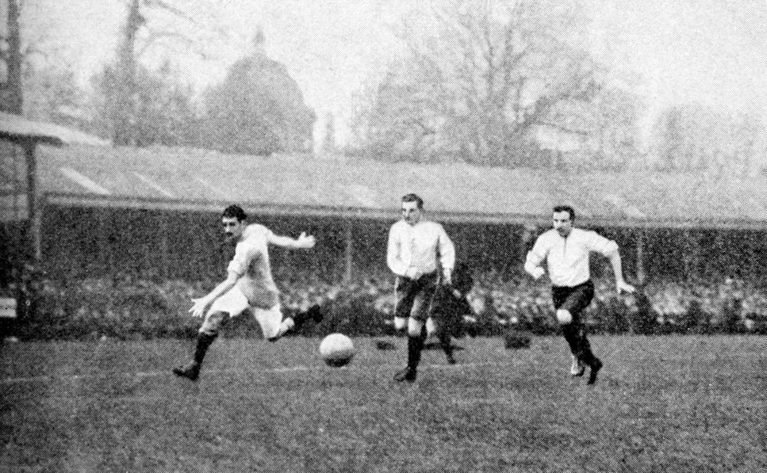
The heavier materials made this workable. A wool or heavy cotton jersey with a loose body and long sleeves accommodates a range of bodies in a way a modern engineered shirt does not, which is why the surviving photographs show eleven men in visibly different fits of the same shirt. The materials themselves are covered in how football shirts were made before polyester.
Shirts were allocated by number, not by size
This is the detail that explains the photographs. For decades the number was attached to the shirt rather than to the player, and the numbers described positions rather than people one to eleven, reassigned every week according to who was playing where.
So a club kept a set of eleven numbered shirts. The player picked at right half wore number four, and number four was whatever size number four had always been. If it was too big, it was too big. Kit men did what they could, and players who particularly minded would sometimes have a shirt altered, but the system put the number first.
Squad numbers changed this completely, because a fixed number belonging to one player for a season means a shirt that can be made to fit that player. That shift is the subject of how squad numbers changed football shirts, and the sizing consequence is rarely mentioned alongside it.
When did letters replace inches?
With the replica market, through the nineteen-seventies and eighties. Once shirts were being sold to the public in volume, a system based on chest measurements in inches was impractical for retail shops needed a small number of stock-keeping sizes, and S, M, L and XL were what the rest of the clothing industry had already settled on.
That was a genuine loss of precision. An inch measurement is unambiguous; a letter is a manufacturer’s opinion. From that point onward the same nominal size meant different things at different makers, which is the problem anyone buying a shirt still deals with today.
Clubs kept using measurements internally for player kit for far longer, and the better suppliers still do. The letters were always a retail convenience rather than a technical standard.
The baggy era and what caused it
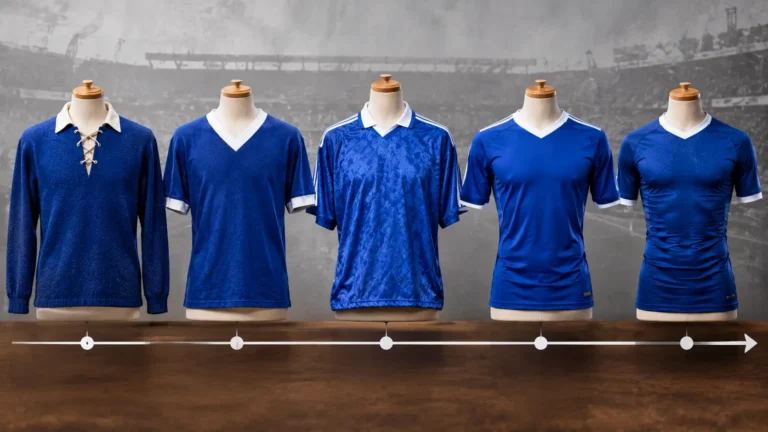
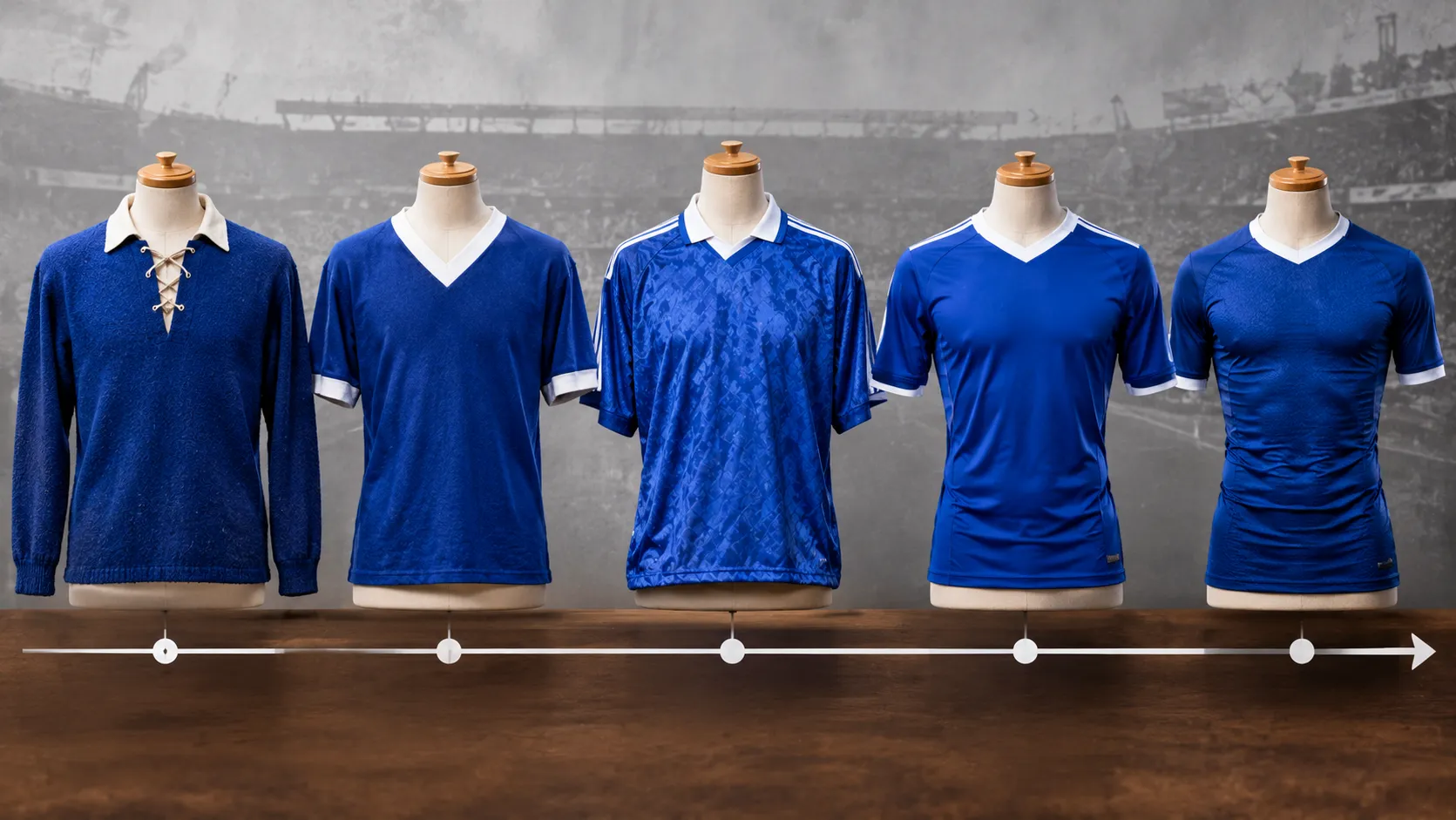
The shirts of the late eighties and early nineties are remembered as enormous, and they were but not because sizing had drifted. The cut itself was deliberately generous, in line with the fashion of the period and with the limitations of the fabrics then in use.
Early synthetics did not breathe well, and a looser garment moved more air. There was also a practical argument about freedom of movement that the engineering of the time could not solve any other way: if the fabric does not stretch, the pattern has to be roomy.
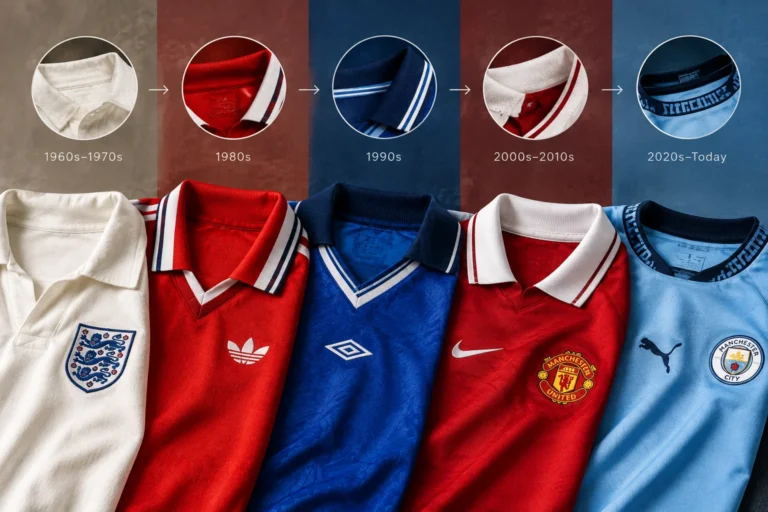
Both of those constraints disappeared over the following decade. Fabrics gained stretch and genuine moisture handling, panelling allowed different materials in different zones, and the cut tightened accordingly which is why a shirt from 1992 and one from 2012 in the same nominal size are barely comparable garments.
Why do two shirts in the same size fit differently?
Three reasons, all still live. First, there is no standard each manufacturer uses its own size blocks, and a medium is whatever that company’s medium is.
Second, clubs now sell multiple product tiers of the same design. The entry replica is cut generously; the player or authentic version is cut for a professional athlete and runs at least a size smaller through the chest and shorter in the body. Two shirts with the same crest, the same season and the same label can differ by a full size.
Third, the pattern varies by kit within a single season. A club’s third shirt is frequently cut differently from its home shirt, because it was designed on a different template, and nobody tells the buyer.
What has not changed
The useful bit: a chest measurement still works. Laying a shirt you already like flat and measuring armpit to armpit gives you a number you can compare against anything a seller publishes, and it bypasses the letter entirely.
That method is a hundred and twenty years old and remains the only reliable way to buy a football shirt you have not tried on. For period shirts it is essential rather than optional, because retro cuts follow the original shape wider through the body, shorter in the sleeve and the size label on a reproduction of a sixty-year-old garment is close to meaningless.
The National Football Museum holds enough period kit to make the change visible in a single room, which is worth an afternoon if you have any interest in how this all moved.
What it tells you about the game
Sizing tracks the commercialisation of football quite precisely. Shirts measured in inches and allocated by number belong to a sport that saw kit as equipment. Shirts sold in four letters to a mass market belong to one that had discovered supporters would buy things. Shirts sold in three tiers of fit belong to the era we are in now.
None of which makes the modern version worse. It is simply a different object, serving a different purpose, for a different buyer and the history is readable in the labels if you know what you are looking at. The traditions around the game shifted on the same timeline, as the story of the testimonial match shows.
Frequently asked questions
How were football shirts sized originally?
By chest measurement in inches, ordered from a catalogue. Letters such as S, M and L arrived much later, with the retail replica market.
Why do old photographs show shirts that fit badly?
Because shirts were allocated by number rather than by size. The number described the position and was attached to a particular shirt, so a player wore whatever size that number was.
Why were nineties shirts so baggy?
A deliberately generous cut, driven by the fashion of the time and by fabrics that neither stretched nor breathed well. A looser garment was the only way to allow movement and airflow.
How should I buy a shirt I cannot try on?
Measure a shirt you already like flat across the chest, armpit to armpit, and compare that number against the seller’s measurements. Ignore the size letter.
About the Author