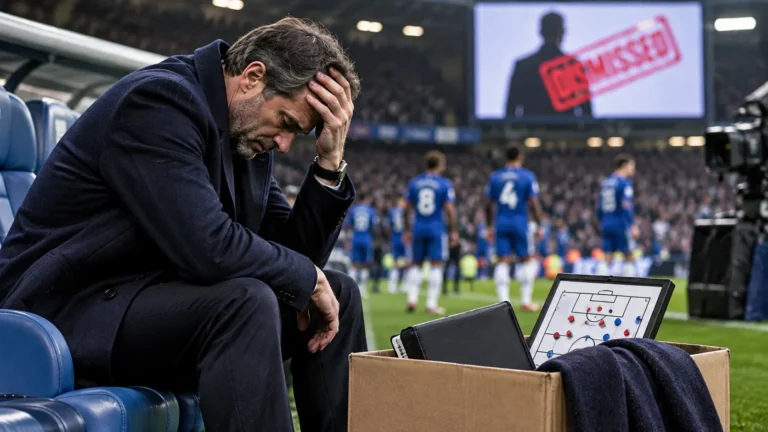




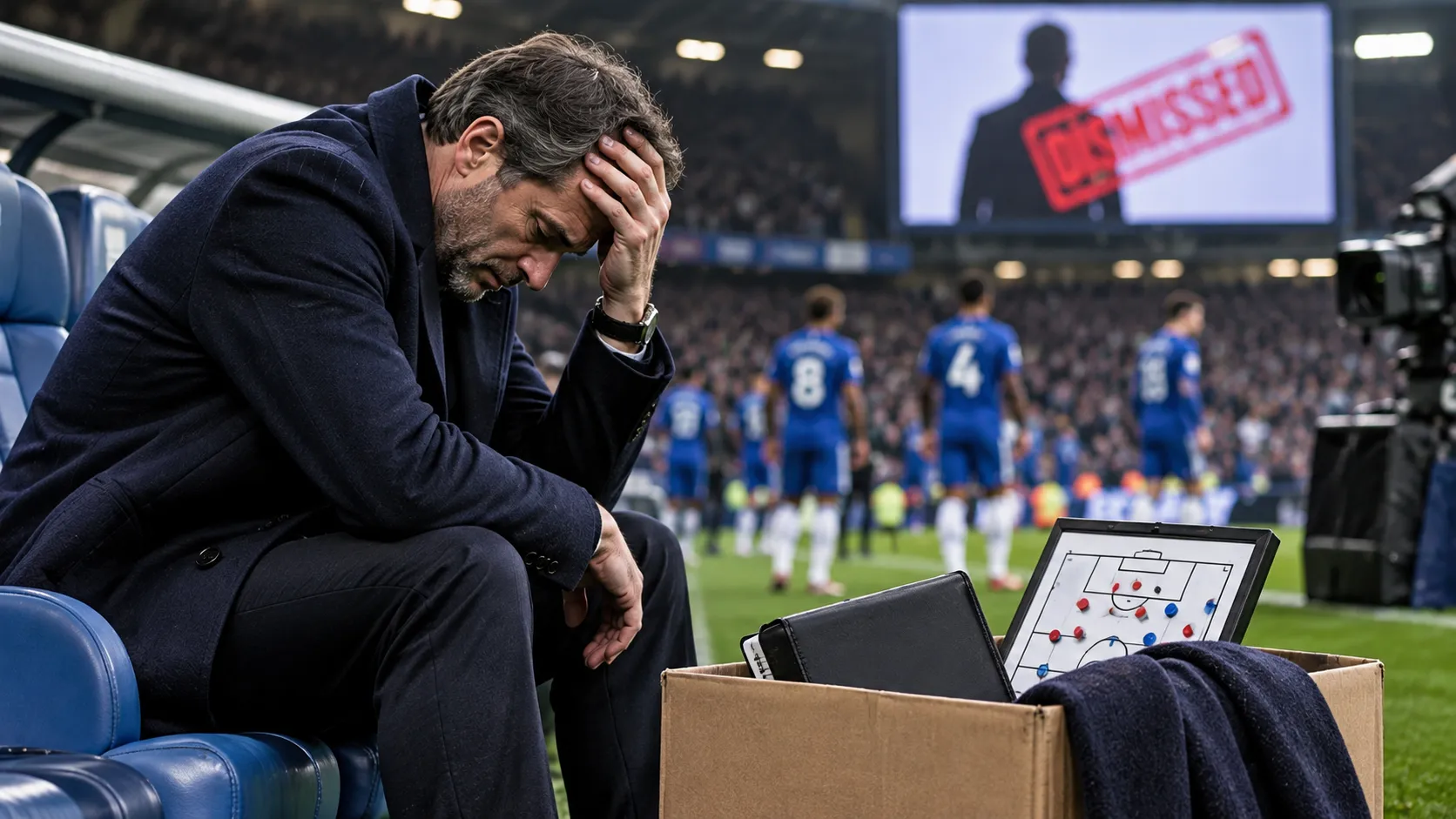
The question of why football managers get sacked mid-season has a conventional answer results that is true and incomplete. Plenty of managers survive bad runs and plenty are dismissed after good ones, and the difference is rarely the points total.
What decides it is usually a combination of trajectory, dressing-room standing, the board’s confidence in a replacement, and the cost of the decision. Results are the trigger rather than the cause.
The decision points
Dismissals cluster. They happen in late September and October, after enough fixtures to establish a pattern and early enough to salvage a season. They happen around Christmas, when the fixture congestion exposes a struggling side and a new appointment gets a long run of matches. And they happen in February and March, when relegation becomes arithmetic rather than a worry.
Very few happen in August, because nobody wants to concede that a summer’s planning has failed after four matches. Very few happen in April, because the available improvement no longer justifies the disruption.
Understanding the calendar explains more about any individual sacking than the match that preceded it. A manager losing heavily in September is in considerably more danger than one losing heavily in April.
What actually triggers it
The direction rather than the position. A side in fifteenth having climbed from eighteenth is in a different situation from one in fifteenth having fallen from eighth, and boards respond to the slope.
Performance relative to expectation matters more than performance in absolute terms. A promoted side in seventeenth is meeting expectations; an established side in seventeenth is failing, and the same points total produces opposite outcomes.
Then the non-results factors. Visible loss of the dressing room substitutions ignored, selections leaked, players briefing against the manager is close to terminal regardless of the table. And a manager who has lost the support of the crowd to the point where home matches are hostile has become a cost to the club rather than an asset.
Does changing the manager actually work?
The evidence is mixed and less flattering to the practice than clubs would like. Studies of managerial change generally find a short-term improvement in results followed by regression, with the overall effect across a season close to neutral.
The reason is that dismissals happen after bad runs, and bad runs end. A side in a poor sequence will improve towards its underlying level whether or not the manager changes, so the bounce attributed to the new appointment is partly the sequence correcting itself.
That said, the honest reading is that the average is not the relevant number. The question is not whether managerial change works on average but whether this change, at this club, with this replacement, improves things and sometimes it clearly does. The average conceals cases where the change was obviously right and cases where it was obviously panic.
Who makes the call?
Rarely one person, and the structure matters. At clubs with a sporting director, the football decision sits with that role and the financial decision with the board, which separates the judgement about whether a manager is the problem from the judgement about whether the club can afford to act.
At clubs without that structure, the decision tends to sit with an owner, which makes it faster, less evidenced, and considerably more variable. The clubs with the highest managerial turnover are almost always the ones where a single individual decides.
The best-run clubs have an answer before they need it. Knowing who the replacement would be, and having established that he is available, changes the decision entirely and the absence of that planning is why clubs sometimes keep a manager they have lost faith in. The role that exists to handle this is covered in what a sporting director actually does.
The cost
Compensation is the constraint nobody discusses publicly. A manager on a long contract with a large settlement due, plus a coaching staff with their own terms, plus the cost of recruiting a replacement and his staff, can run to a very substantial sum.
For a club already underperforming and therefore already generating less revenue than budgeted that is money which cannot be spent on players. Several clubs have kept managers they had decided against simply because the sums did not work.
This is also why contract lengths have shortened in some leagues and why rolling arrangements have become more common. A board that wants flexibility prices it in at the start, and a manager who accepts a shorter deal is accepting a weaker position in exchange for the job.
The caretaker question
Appointing from within is the option boards reach for when they are not ready to decide, and it has a worse record than its popularity suggests.
A caretaker has authority over selection and almost none over anything else. Players know the arrangement is temporary, which undermines the one thing a struggling side most needs, and the caretaker himself is in an impossible position auditioning for a job while being asked to stabilise a situation.
Where it works is as a genuine bridge: two or three matches while a planned appointment completes, with everyone clear about what is happening. Where it fails is as a substitute for a decision, dragging on for two months while the board looks for a replacement it has not identified.
The version that works least often is the caretaker who is given the job permanently on the strength of a short good run. The sample is too small to tell you anything, and the appointment is being made on the basis of the bounce that would have happened anyway.
What a new manager actually changes
Less than the narrative suggests, in the short term. He cannot change the squad until a window opens, cannot rebuild fitness mid-season, and has two or three sessions a week to work with.
What he can change immediately is selection, shape and intensity, and the early improvement in most cases comes from exactly those three. Dropping a player who was not performing, changing to a shape the squad suits better, and raising the level in training produce quick returns.
What takes longer is anything structural, which is why the second season is the one that tells you whether the appointment was right. A manager judged on three months is being judged on the easiest part of his job. The pre-season he eventually gets is where the real work happens, which is set out in how penalty shootouts are prepared for as one specific example of preparation that cannot be improvised.
What it looks like from the outside
Watch the language. A board statement expressing “full confidence” is a known signal and has been for decades, and the absence of a statement is more reassuring than its presence.
Watch the coaching staff. A manager whose assistant leaves, or whose appointments are made above him, is a manager whose position has already changed whatever anyone says.
And watch the fixture list. A board that has decided will usually wait for a sensible break an international window, a gap between matches to make the change, because a new appointment arriving three days before a fixture gets no preparation at all.
Frequently asked questions
When do most sackings happen?
In clusters: late September and October, around Christmas, and in February and March. Very few happen in August or April.
Does sacking the manager improve results?
The evidence suggests a short-term improvement followed by regression, with a roughly neutral effect across a season. Part of the bounce is the bad run ending on its own.
Who decides?
At well-structured clubs, a sporting director makes the football judgement and the board the financial one. At clubs where an owner decides alone, turnover is consistently higher.
What stops a club acting?
Cost. Compensation for the manager and his staff, plus recruiting replacements, can be prohibitive for a club already underperforming financially.
About the Author