



For most of the game’s history, an old football shirt was something you either still owned or had lost. There was no practical way to find a specific season’s kit from a club you did not live near, and no reliable way to establish what one was worth.
That changed completely within about two decades, and the consequences ran further than simply making shirts easier to buy.
What did the market look like before?
Small, local and largely informal.
Old shirts circulated through club shops clearing stock, through market stalls, and through people selling things they no longer wanted. Finding a particular season meant knowing someone, or waiting, or getting lucky. Anything from a club outside your region was effectively unobtainable.
Pricing was equally informal. Without a visible market there was no reference point, so a shirt was worth whatever the two people involved agreed, and those figures varied wildly for identical items.
How did moving online change identification?
More profoundly than it changed availability, which is the underrated part.
When shirts were traded locally, identifying a season relied on individual memory and whatever reference material happened to be to hand. Mistakes were common and uncorrected. A shirt could be described as being from one season for years without anyone in a position to say otherwise.
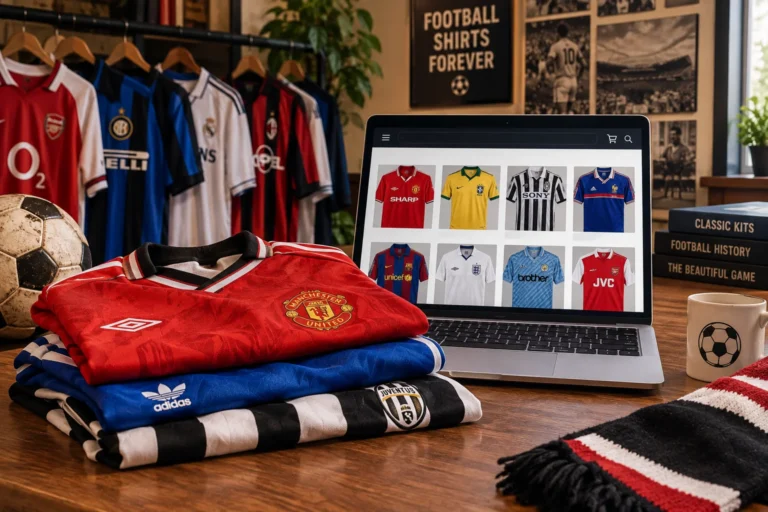
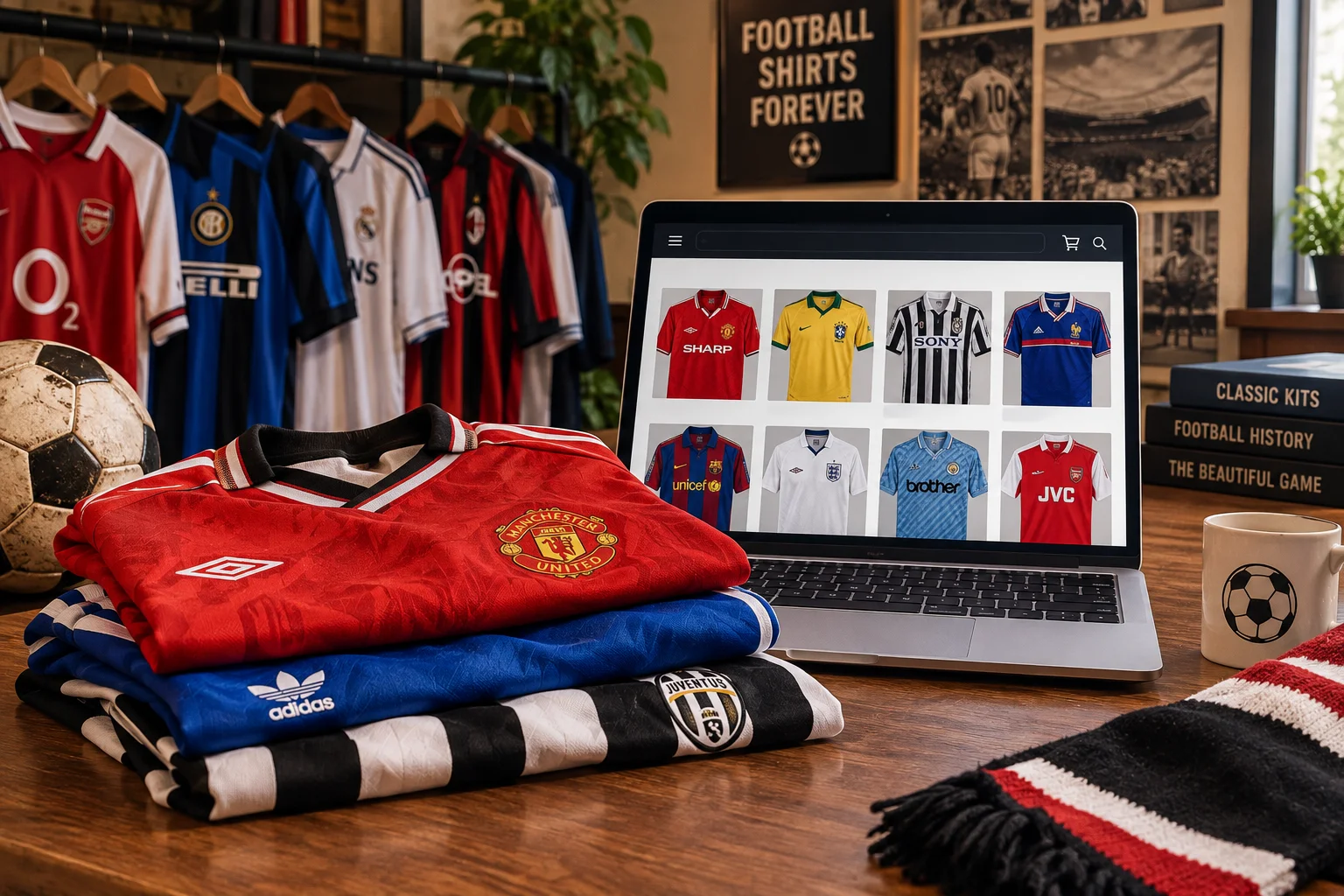
Online listings put thousands of shirts side by side, with photographs, in front of people who collectively knew a great deal. Identification became a shared activity rather than an individual guess. Details that had never been documented anywhere, like which seasons used which collar treatment, became common knowledge because enough people compared enough examples.
Anyone searching football kits online today benefits from that accumulated work, most of which was done by enthusiasts rather than by anyone official.
What happened to pricing?
It became visible, which is a different thing from becoming lower.
A visible market produces reference points. Once enough examples of the same shirt have changed hands publicly, there is a rough consensus on what it is worth, and outliers in both directions become obvious. That is useful for buyers and equally useful for sellers.
It also revealed how much variation there is between clubs and seasons. Shirts from famous seasons at large clubs are not necessarily the valuable ones. Frequently the shirts that hold value are from smaller production runs, short lived sponsorships or obscure kits that were unpopular at the time and therefore made in low numbers.
Why do obscure shirts hold value?
Scarcity, and the fact that scarcity was not planned.
A club’s popular home shirt from a successful season was made in enormous quantities and a great many survive. A third kit from an unremarkable year, in a colour nobody liked, sold poorly and was made in small numbers. Twenty years later there are far fewer of the second, and the people who want one have to compete.
This is why the resale market frequently looks counterintuitive to people encountering it for the first time. The desirable shirts are often not the memorable ones.
What should you check on an older shirt?
The same construction points as on a new one, with additions specific to age.
Crest attachment, stitching at the hem and cuffs, and fabric condition all still apply. What you add is pilling, which develops on older polyester with heavy wear and changes how a shirt looks without affecting how it fits. And you check any printing, since heat applied names and numbers crack and lift with age far faster than the shirt itself deteriorates.
For anything described as vintage or retro, ask for photographs of the specific item rather than a stock image. A seller who cannot photograph the actual shirt is a seller to be cautious with, and that has been true throughout the market’s existence. Publications like FourFourTwo have documented kit history extensively, which makes cross referencing a listing considerably easier than it used to be.
Has reproduction changed the picture?
Considerably, and it is the main complication in the market now.
Reproductions of famous older kits are widely available and many are well made. That is broadly good for people who want to wear a classic design and have no interest in owning an original. It does mean that identifying an original requires more care than it did, since the visual reference points are no longer unique to the genuine article.
Construction details are the reliable separator. Fabric weight, stitching methods, label construction and crest application all differ between eras in ways that reproductions frequently do not replicate exactly, because replicating them would cost more than the market supports.
Who actually built the reference material?
Almost entirely enthusiasts, which explains both its strengths and its gaps.
Clubs rarely kept systematic records of their own kits, and manufacturers did not publish specifications for shirts made decades ago. What exists now is the product of collectors photographing what they owned, comparing it against match footage, and arguing about the discrepancies in public until a consensus formed.
The strength of that process is that it is self correcting over time. The weakness is that coverage is uneven. Popular clubs and famous seasons are documented in enormous detail. Smaller clubs and unremarkable years frequently have gaps, and a shirt from one of those gaps can be genuinely difficult to place even for someone experienced.
What the shift actually produced
A market that is larger, better documented and far more transparent than it was, built mostly by people doing it for interest rather than for money.
The side effect is that kit history itself is now recorded in a way it never was. Clubs did not keep detailed records of their own shirts. Manufacturers did not publish specifications. Most of what is known about which season used which collar exists because collectors compared examples and wrote it down.
Where does that leave someone starting out? Buy the shirts you actually want rather than the ones described as investments, because the market’s history shows how poorly people predict which kits will matter. The shirts that hold value now were mostly unwanted at the time, which is precisely why so few of them survive. Nobody was buying them as investments either.
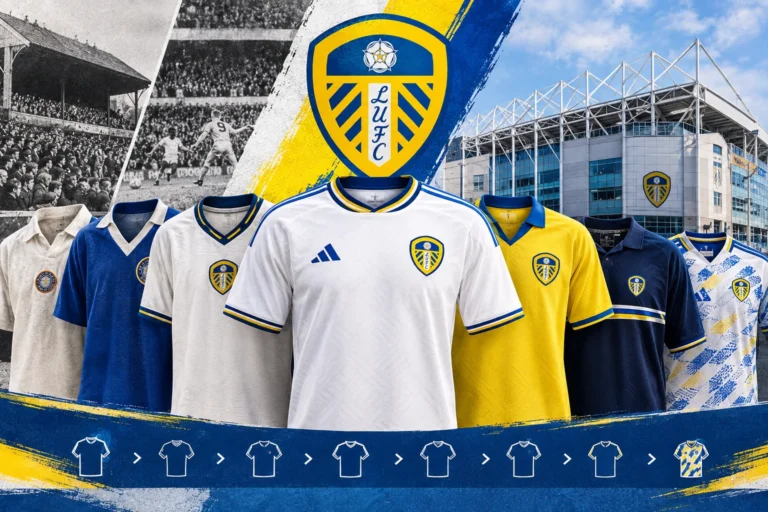
For dating a specific club’s shirts, the process is the same everywhere, and our guide to reading a Leeds United shirt season by season works through it in detail. For a club where numbering carries much of the history, Chelsea kits, numbers, legends and eras covers that angle.
Frequently asked questions
Why are some old football shirts worth more than famous ones?
Scarcity rather than fame. Popular home shirts from successful seasons were made in huge numbers and many survive. Unpopular third kits from unremarkable years were made in small numbers, so fewer remain.
How do I tell an original shirt from a reproduction?
Construction details rather than appearance. Fabric weight, stitching methods, label construction and crest application differ between eras in ways reproductions rarely replicate exactly.
Who documented football kit history?
Largely collectors rather than clubs or manufacturers. Most of what is known about which season used which collar or crest comes from enthusiasts comparing examples publicly, which is why coverage is detailed for big clubs and patchy elsewhere.
What should I check on a vintage football shirt?
Crest attachment, stitching at the hem and cuffs, fabric pilling, and the condition of any printing. Always ask for photographs of the specific item rather than a stock image.
About the Author